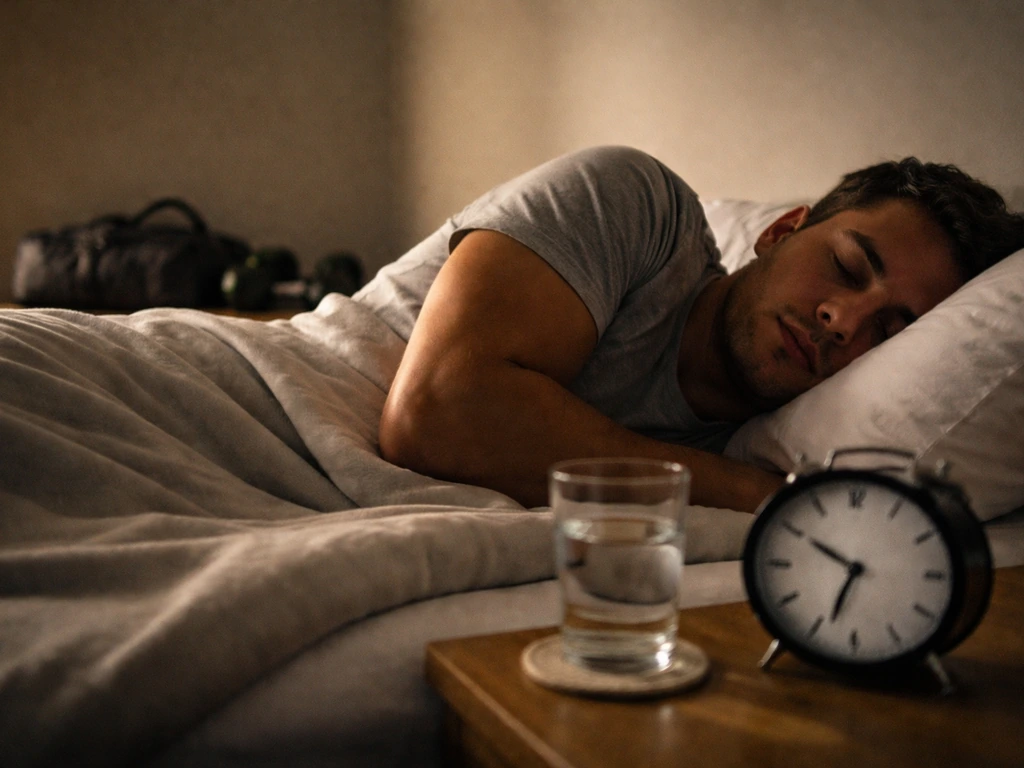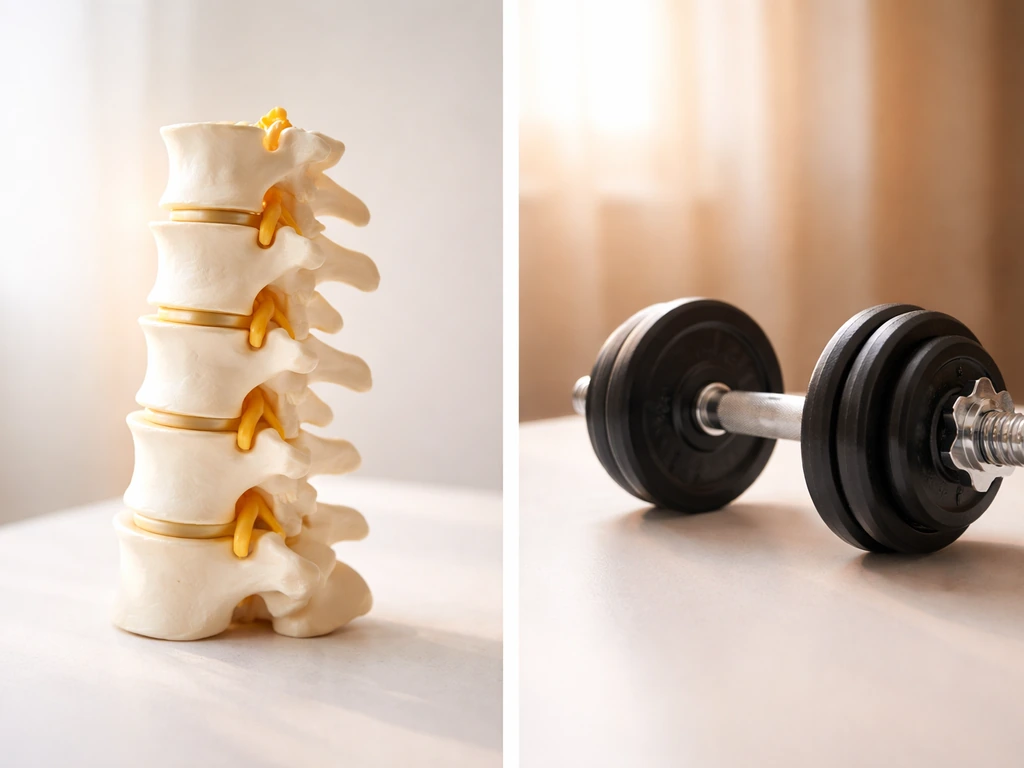
Yes, sleep directly helps you build muscle, and it's not a minor factor you can compensate for with extra protein or more sets at the gym. During sleep, your body does the bulk of its actual muscle repair and growth work: muscle protein synthesis (MPS) runs at higher rates, growth hormone pulses, and the inflammatory signals from your workout get resolved. It does not mean you gain meaningful muscle overnight, but that sleep quality and duration affect the overnight repair and growth process does muscle grow overnight. Cut sleep short and that whole process gets blunted. One controlled study found that acute sleep deprivation reduced skeletal muscle protein synthesis by around 18%. That's not a rounding error. Think of sleep as the third leg of the muscle-building stool, alongside training and nutrition. Kick it out and the whole thing wobbles.
Does Sleep Help Grow Muscles? Science and How to Use It
What's actually happening in your body while you sleep
Sleep isn't passive downtime. It's a coordinated biological process, and a lot of the most important muscle-building activity happens during it. Your sleep cycles between NREM (stages N1 through N3) and REM, and it's deep NREM sleep, specifically N3 (slow-wave sleep), where growth hormone secretion peaks. GH drives protein synthesis and fat metabolism, and most of your daily GH output happens in those early-night deep sleep windows. Miss those hours and you miss a disproportionate share of your anabolic signaling.
Muscle protein synthesis itself stays elevated overnight if you've trained and eaten properly beforehand. Pre-sleep protein feeding (more on this later) has been shown to increase overnight MPS rates in both younger adults and older men, largely because the sleeping body still processes amino acids effectively and channels them toward repair. Your satellite cells, the stem-cell-like precursors responsible for muscle regeneration and growth, also follow circadian timing cues. Research has shown that the circadian clock directly regulates satellite cell function and muscle regeneration capacity, which means your body is literally timed to do repair work during sleep, not any random quiet period.
At the same time, cortisol, your primary catabolic stress hormone, typically drops in the first half of the night and rises toward morning. This low-cortisol window is part of why early-night sleep is so valuable for muscle. When you lose sleep or shift your sleep window, that cortisol curve gets disrupted, and the balance tips toward a more proteolytic (muscle-breaking) environment. You need both sides of the equation: the anabolic push from GH and IGF-1 and the catabolic suppression that comes with real, quality sleep.
How poor sleep wrecks your lifting progress
The damage from bad sleep is multi-layered, and it hits every input your body needs to grow: hormones, performance, recovery, and inflammation. Here's how each one breaks down.
Strength and performance take an immediate hit
A systematic review of 13 studies found that around 77% of them reported significant decrements in at least one measure of muscle strength under sleep loss compared to normal sleep. This isn't just feeling sluggish. You will likely move less weight, do fewer reps, and recover more slowly between sets. One controlled crossover study compared 8 hours of sleep, 4 hours, and total sleep deprivation in resistance-trained participants and found measurable declines in strength, power, and endurance. Less training stimulus from each session means fewer adaptations over weeks and months.
Hormones shift toward catabolism
Sleep restriction creates an endocrine environment that's actively unfriendly to muscle. Cortisol rises. IGF-1 and free testosterone tend to decrease. If free testosterone is falling during sleep restriction, that can make it harder to hit your muscle growth targets even if your training and protein are on point. Research following participants through eccentric exercise damage with and without sleep deprivation confirmed that sleep-deprived recovery altered cortisol, free and total testosterone, and IGF-1 levels alongside markers of inflammation. The net result is that your body is less primed to use available protein for building and more inclined to break down existing tissue. It's also worth noting that one study found controlling cortisol and testosterone pharmacologically reduced insulin resistance development during sleep restriction by more than 50%, which shows these hormones are causally involved, not just correlated.
Inflammation stays elevated and recovery slows
After a tough workout, your muscles need to resolve an acute inflammatory response before proper repair can happen. Sleep is a key part of that resolution. When you restrict sleep, pro-inflammatory cytokines like IL-6, TNF-alpha, and IL-1beta stay elevated longer. Even a single night of total sleep loss was enough to measurably raise TNF-alpha in healthy men in one controlled experiment. Extended restriction over five or more days amplifies this further. This is consistent with review evidence that experimental sleep restriction, such as 5 days of restricted sleep, can increase inflammatory cytokine-related signals like IL-1, IL-6, and IL-17 Extended restriction over five or more days amplifies this further.. The practical effect: you feel sorer for longer, recovery between sessions takes more time, and you're at greater risk for overreaching if training volume stays high.
How much sleep you actually need and what good sleep looks like
For most adults training for muscle growth, 7 to 9 hours per night is the target range. That's not a soft suggestion. It's where you consistently get enough slow-wave sleep for GH release, enough REM for nervous system recovery, and enough total time for inflammation to resolve. Going below 6 hours habitually is where the research starts to show meaningful negative effects on body composition, strength outcomes, and hormonal balance.
Quality matters just as much as quantity. Eight hours of fragmented, light sleep isn't equivalent to 7 hours of solid consolidated sleep. Good sleep looks like: falling asleep within 20 to 30 minutes, cycling through 4 to 6 full sleep cycles (roughly 90 minutes each), waking feeling rested rather than groggy, and not needing to rely on an alarm to function. If you regularly need 3 cups of coffee to feel awake, that's a signal your sleep quality or duration isn't where it needs to be.
Older adults have a specific consideration here. Sleep architecture changes with age: you spend less time in N3 deep sleep and GH secretion declines naturally. This doesn't mean sleep matters less for older lifters, it means optimizing what sleep quality you can get becomes even more important. The good news is that resistance training itself improves sleep quality. One randomized controlled trial in sarcopenic older adults found that resistance training increased N3 sleep and reduced the time it took to fall asleep, measured objectively with polysomnography. So the training and sleep relationship is genuinely bidirectional.
A practical sleep plan built for muscle gain
You don't need to overhaul your life. A few consistent habits done well make a meaningful difference. Here's a framework you can actually use.
Set a consistent sleep and wake time
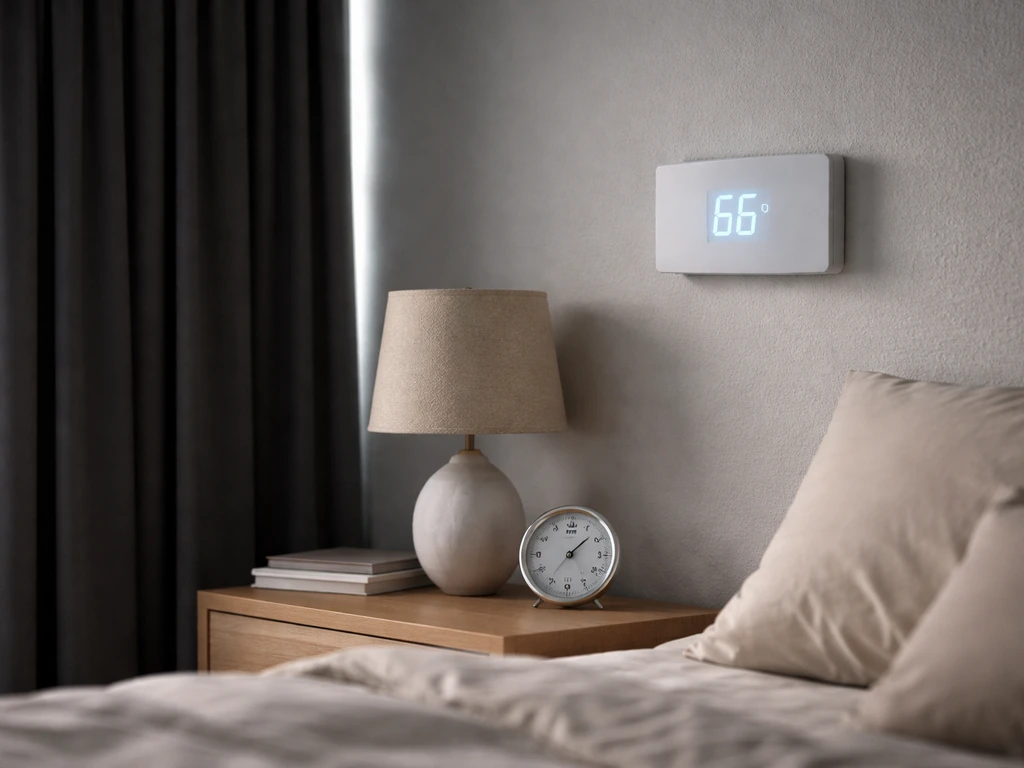
Your circadian rhythm runs on schedule. Going to bed and waking at the same time every day (including weekends) anchors that rhythm, which in turn keeps your hormonal patterns consistent. Aim to be in bed 8 to 8.5 hours before your desired wake time to reliably get 7 to 8 hours of actual sleep. Varying your schedule by more than an hour on weekends is enough to shift your circadian clock and blunt the quality of weekday sleep.
Control your sleep environment
- Temperature: keep the room between 65 and 68°F (18 to 20°C). Core body temperature needs to drop to initiate deep sleep.
- Light: blackout curtains or a sleep mask. Even low light through closed eyelids suppresses melatonin.
- Noise: use earplugs or a white noise machine if your environment is inconsistent.
- Screens: stop using phones and laptops at least 30 to 60 minutes before bed. Blue light delays melatonin release and keeps your brain in alert mode.
Manage caffeine and alcohol
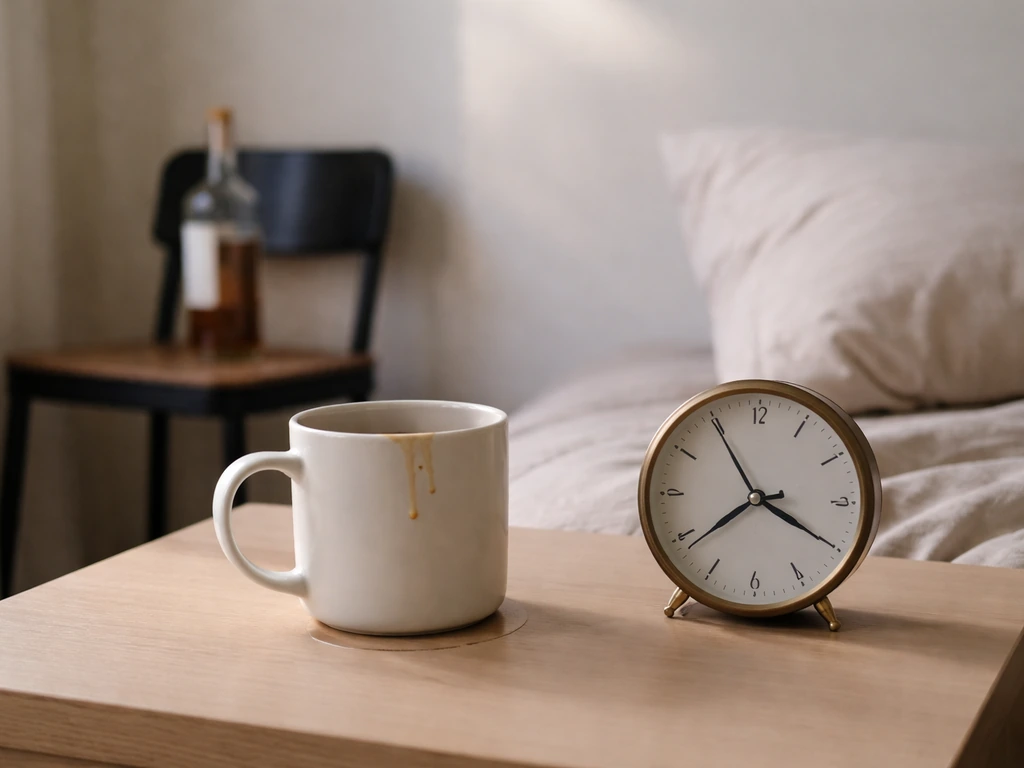
Caffeine has a half-life of 5 to 7 hours, meaning a 3pm cup of coffee still has half its stimulant load in your system at 9 or 10pm. Cut off caffeine by 1 to 2pm if you're sleeping around 10pm. Alcohol is trickier because it feels like a sedative but actually fragments sleep architecture, particularly REM sleep, in the second half of the night. One or two drinks a few hours before bed will measurably reduce sleep quality even if you feel like you slept fine.
Build a wind-down routine
Your nervous system needs a transition from the demands of the day to a sleep-ready state. A 20 to 30 minute wind-down routine before bed works well for most people. This could be stretching, light reading, journaling, or a warm shower (the post-shower drop in skin temperature helps induce sleepiness). The specific activity matters less than doing it consistently at the same time each night.
Combining sleep, training, and protein for best results
Sleep doesn't work in isolation. It amplifies the results of training and nutrition, or it limits them. The biggest leverage point most people are missing is pre-sleep protein.
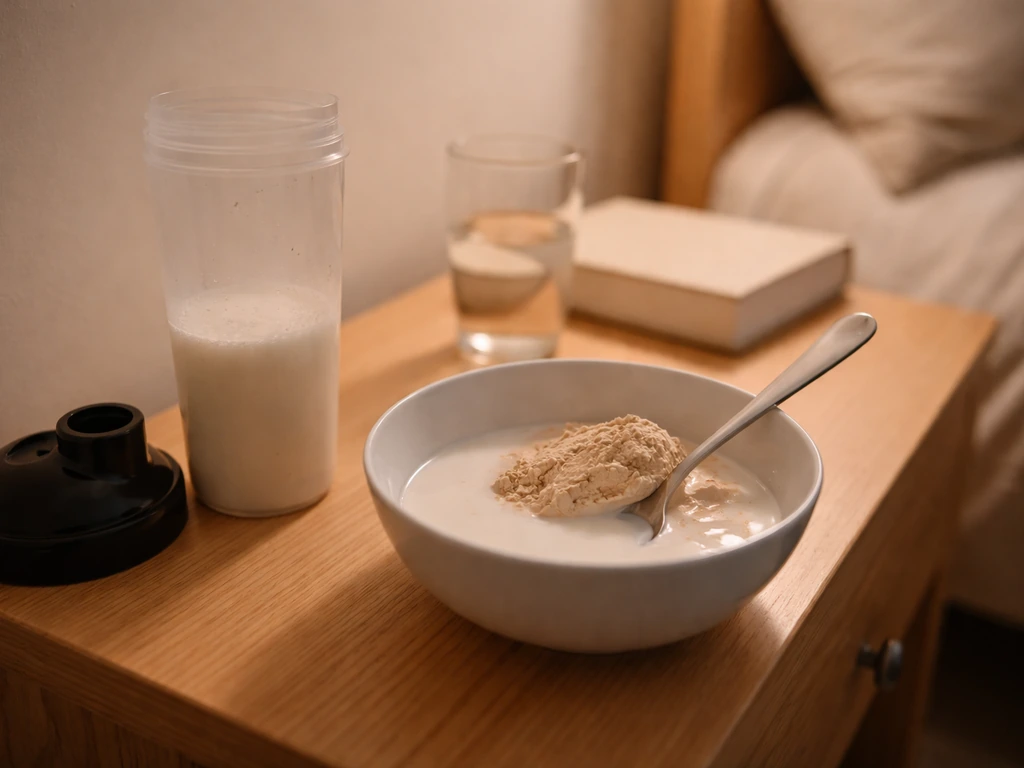
Research consistently shows that consuming protein before sleep increases overnight muscle protein synthesis rates. Carbs can also help support training performance and replenish glycogen, which indirectly makes it easier to train hard enough to grow pre-sleep protein. A serving of around 30 to 40 grams of casein or a mixed protein source 30 to 60 minutes before bed gives your body amino acids to work with during the overnight fasting window. This effect is especially well-documented in older men, where pre-sleep protein ingestion was shown to increase overnight MPS rates. For people over 50 who already have a harder time maximizing MPS from each meal, this is a practical tool worth using regularly.
Evening resistance training also helps here. One study found that resistance exercise in the evening specifically augmented the overnight muscle protein synthetic response to pre-sleep protein ingestion. So if you train later in the day and follow it with a protein-rich pre-sleep meal or shake, you're stacking two anabolic signals during the most repair-active window of your 24-hour cycle.
Beyond protein, total caloric intake matters. Being in a meaningful caloric deficit reduces the body's capacity to support both MPS and optimal sleep quality. You can build muscle in a moderate deficit, but chronic undereating combined with insufficient sleep is a double hit that makes both processes less efficient. If your goal is maximizing muscle gain, a slight caloric surplus paired with 7 to 9 hours of sleep and consistent training is still the most reliable formula available.
| Input | Role in muscle growth | How sleep connects |
|---|---|---|
| Sleep (7–9 hrs) | Enables MPS, GH release, hormonal recovery | The process itself; without it, other inputs don't fully work |
| Protein (1.6–2.2g/kg) | Provides amino acids for muscle repair and synthesis | Pre-sleep protein boosts overnight MPS directly |
| Resistance training | Creates the mechanical signal that triggers adaptation | Evening training enhances pre-sleep protein's anabolic effect |
| Total calories | Supports energy balance for growth and recovery | Deficit amplifies sleep-loss hormone disruption |
| Rest days | Allows tissue repair between sessions | Sleep on rest days is equally critical for repair |
What to do on bad sleep nights (and when to get help)
Life happens. You'll have nights where you get 4 or 5 hours for unavoidable reasons. Here's how to minimize the damage rather than panic about it.
Use naps strategically
Napping isn't just for tired afternoons. In a randomized controlled trial, extending sleep duration was used to counter the mechanistic effects of short sleep restriction, which included insulin resistance, hypercortisolism, leptin deficiency, and increases in IL-6 and other pro-inflammatory cytokines sleep restriction can induce insulin resistance, hypercortisolism, leptin deficiency, and increased IL-6 and pro-inflammatory cytokines. Research shows that a 30-minute nap after a night of sleep restriction can reverse some of the hormonal and inflammatory changes induced by the poor night, including measurable reductions in IL-6 and urinary norepinephrine. A separate randomized study confirmed that a 2-hour midafternoon nap after sleep loss improved performance, reduced sleepiness, and improved cortisol and IL-6 responses. Even a 20 to 30 minute nap around midday can partially restore alertness and reduce the cortisol elevation that comes with sleep debt. Keep naps under 45 minutes to avoid deep sleep inertia and waking up feeling worse.
Adjust training intensity on low-sleep days
After a bad night, consider reducing training volume or intensity rather than grinding through a full session at the same load. But those low-sleep days can also affect what happens on your rest days, because muscle repair is still happening even when you are not training do muscles grow on rest days. Your strength will likely be down, your recovery capacity is compromised, and pushing to failure in that state increases injury risk without proportional benefit. A moderate session at 70 to 80% of your normal intensity keeps the training stimulus while reducing the recovery cost.
Don't skip pre-sleep protein just because sleep was bad
On nights when you know you'll be sleeping less, the pre-sleep protein strategy matters even more. Whatever MPS activity can happen in the hours you do sleep, you want to support it with available amino acids. Keep the pre-bed protein habit regardless of the circumstances.
When to take sleep problems seriously
Occasional poor sleep is normal. Chronic sleep problems (regularly taking longer than 30 minutes to fall asleep, waking frequently, feeling unrefreshed most mornings, or relying on sleep aids regularly) are worth addressing with a doctor or sleep specialist. Conditions like sleep apnea are significantly more common than most people realize, particularly in older adults and heavier individuals, and they completely undermine sleep quality even when time in bed looks adequate. If your training and nutrition are dialed in but you're still not recovering well, poor sleep quality is one of the first places to investigate.
The bottom line is this: sleep is not optional for muscle growth. It's where the actual building happens. Training tells your body what to build. Protein gives it the materials. Even if training and nutrition are solid, your muscles still need adequate rest to fully grow and adapt muscles need rest to grow. Sleep is when construction takes place. Getting 7 to 9 hours of consistent, quality sleep, pairing it with pre-sleep protein, and protecting your sleep environment are among the highest-return changes most people can make to their muscle-building program, often without adding a single extra set to their training week.
FAQ
If I only sleep 5 to 6 hours, can I still grow muscles with harder training and more protein?
You can gain some muscle, but chronic short sleep reduces the muscle repair and growth process, it tends to blunt strength and endurance, and it can shift your hormone and inflammation environment in a less anabolic direction. If you cannot extend total sleep, the next best move is to reduce training intensity or volume for several days and keep pre-sleep protein consistent, so you are not stacking recovery limits.
How quickly does sleep loss affect muscle recovery and performance?
Effects can show up within a single night. Sleep restriction can raise inflammatory markers and worsen next-day performance, so you may feel more sore and you may be less able to train at the same quality the following session, which then compounds over weeks.
Does oversleeping sometimes help muscle growth, or is there a point of diminishing returns?
More sleep usually helps when it corrects a deficiency, but consistently sleeping far beyond your usual schedule can indicate fragmented sleep or an underlying issue. If you routinely need unusually long sleep to feel normal, it can be a sign your sleep quality is poor, and that matters as much as total time.
Is it better to get more sleep on one night or spread it across the week?
Spreading sleep supports more consistent nightly cycles and helps preserve early-night deep sleep and the usual hormone timing. One or two long catch-up nights may help, but repeated under-sleep followed by intermittent recovery can still disrupt the pattern your body uses for repair.
Can I use naps to replace lost nighttime sleep for muscle growth?
Naps can partially reverse some of the hormonal and inflammatory changes from sleep loss, especially when kept short and timed. However, naps do not fully substitute for a full night because the early-night deep sleep window is hard to recreate, so treat naps as a support tool, not a complete replacement.
What if I wake up during the night, does that ruin the muscle-building benefits of sleep?
Frequent awakenings reduce sleep consolidation and can fragment REM and deep NREM sleep, which lowers the quality of the anabolic signals discussed in the article. If you wake often, focus on sleep continuity strategies (temperature, darkness, reducing late alcohol, and consistent wake times), because “time in bed” alone may be misleading.
Do I need pre-sleep protein even if I eat enough protein earlier in the day?
Pre-sleep protein helps because it increases overnight muscle protein synthesis during the fasting period rather than relying only on daytime meals. If your total daily protein is already high and you are consistent with meals, you may get less additional benefit, but the overnight timing still tends to provide an extra anabolic push, especially in older adults.
Should I train close to bedtime to improve the sleep-muscle effect?
Evening resistance training can augment the overnight muscle response to pre-sleep protein, which is helpful. The catch is that some people find hard training too late can delay sleep onset, so if you struggle to fall asleep, move your workout earlier or keep the pre-bed protein but adjust training intensity and timing.
Does caffeine affect muscle growth even if it does not feel like it harms my gym performance?
Caffeine can still reduce sleep quality by delaying sleep onset or altering sleep depth, even when you feel wired but functional. Because caffeine has a long half-life, cutting off earlier is a practical step to protect the deep sleep window that supports repair.
If my sleep is improved but I still do not gain muscle, what should I check next?
After sleep, the common missing links are progressive overload, total calorie intake (especially if dieting), and sufficient overall protein distribution across the day. Also watch for chronic under-recovery from training volume or too-frequent failure training, because sleep cannot fully compensate for excessive fatigue.
When should I suspect a sleep problem like sleep apnea rather than treating sleep as a simple schedule issue?
Consider speaking with a clinician if you snore loudly, have witnessed breathing pauses, wake unrefreshed most mornings, or rely on sleep aids regularly. These issues can severely reduce sleep quality even when you spend 7 to 9 hours in bed, and they can directly undermine muscle recovery.